
01 / 03
EMS billing processes typically span 4 to 5 phases from patient care reporting to reimbursement, with financial health dependent on maintaining strong cash flow cycles
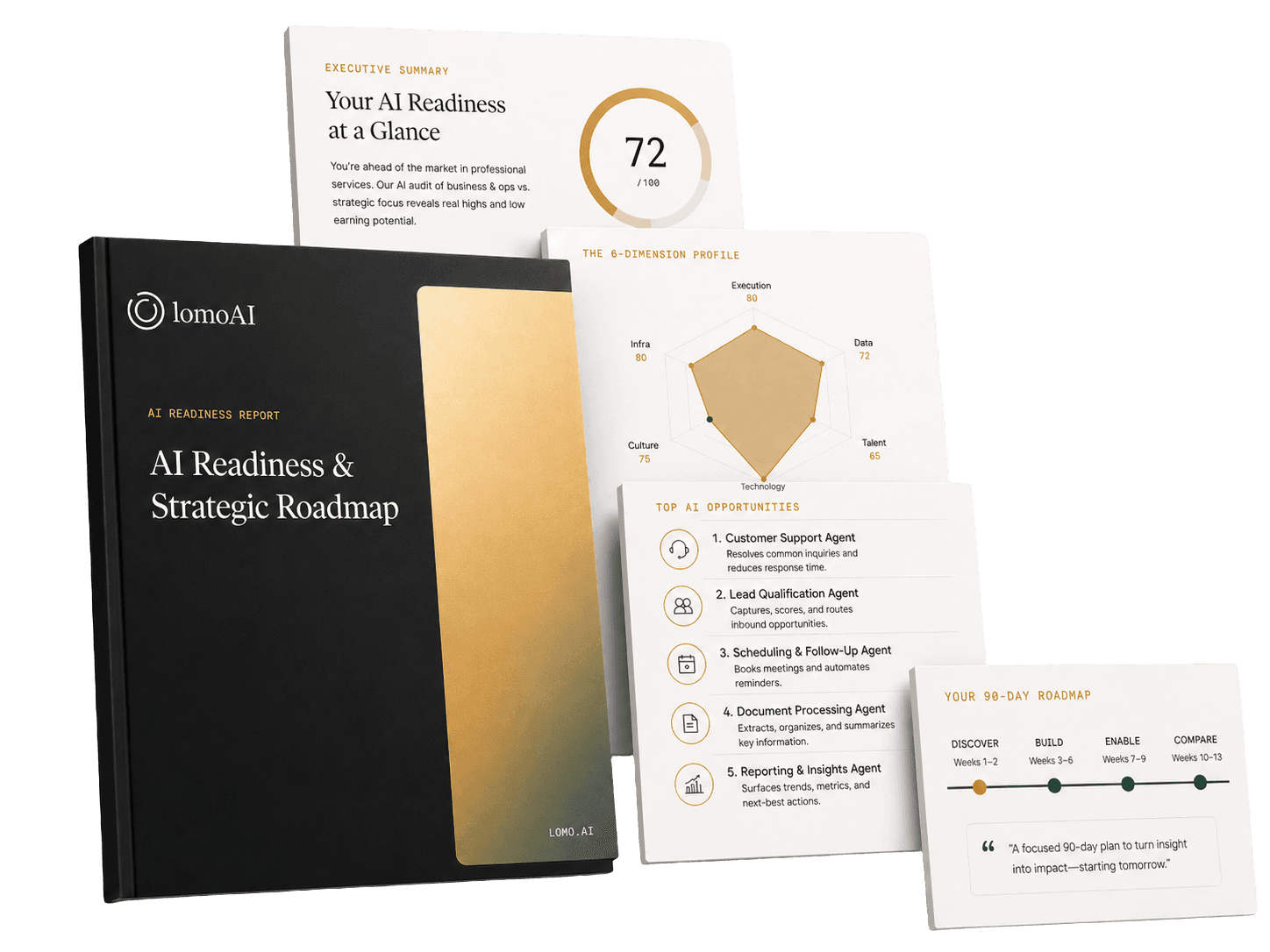
Take the Lomo AI Readiness Assessment and receive a custom breakdown of where AI systems can reduce manual work, improve response times, increase patient transport volume, and create more operational leverage across your service.
Built on


01
Emergency calls, patient requests, and transport inquiries get overlooked when dispatch is busy. AI agents respond instantly, ensuring every call for assistance is answered.
02
Scheduling, route planning, insurance paperwork, and incident reports consume valuable time for your team. AI agents handle these tasks end-to-end, freeing up staff for critical care.
03
Follow-ups on patient status, transport updates, and family communication fall through the cracks during busy shifts. AI agents manage outreach and updates, ensuring no patient is left unattended.
A personalized report built from your responses, showing where AI can create the most value in your business.
Your overall score and what it means.
See how you compare to similar companies.
Strategy, Data, Talent, Infrastructure, Culture, and Execution.
Your highest-leverage workflows and agent ideas.
Where to start and which agents to build first.
A practical roadmap for the first quarter.
Why now
01 / 03
EMS billing processes typically span 4 to 5 phases from patient care reporting to reimbursement, with financial health dependent on maintaining strong cash flow cycles
02 / 03
Implementing triage systems in emergency dispatch can reduce processing time by an average of 30 seconds per call, significantly impacting time-sensitive emergency response
03 / 03
Dynamic ambulance relocation powered by AI reduces unit hours, fuel consumption, and overtime costs in operational settings
Our AI Readiness Assessment identifies the workflows in your ambulance service that are most ready for AI, from dispatch optimization and route planning to patient tracking, inventory management, crew scheduling, reporting, and operations.
2 questions. Your number in 10 seconds.
Question 01 / 02
What we'd build
Four examples of AI operations we'd install inside a operation. Tap any card to see how it runs.
01
02
03
04
How we work with ambulance services
We embed a fractional AI team inside your operation to build, deploy, and operate the systems identified above. 90 day cycles with measurable outcomes.
01
Two weeks. We map your workflows, identify the highest ROI AI opportunities, and deliver a prioritized deployment roadmap. Four hours of your time.
See how the Sprint works02
A fractional Chief AI Officer plus implementation team inside your operation. We build the systems, train your people, and run them until they compound.
See how Transformation works03
Structured AI fluency programs built for ambulance services. Your team learns to operate and extend the systems we deploy, not rent them forever.
Training programsRelated industries
Start with a 3 minute AI audit, or book a strategy call with our team. We will walk through which use cases make the most sense for your operation specifically.